
My Story: Prognosis Invites Participation
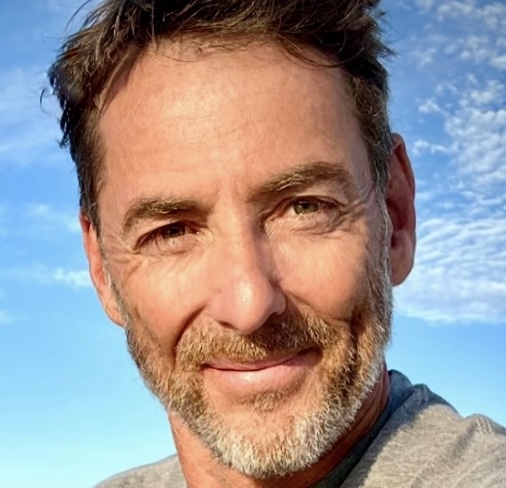
On Valentine's Day, February 2018, my life changed forever.
I was diagnosed with HPV-related squamous cell carcinoma of the anus. Within months, following the prescribed treatment protocol, the cancer had spread beyond the primary tumour to my lymph nodes, liver, lung and kidney. On 17 August 2018—my 51st birthday—two Professors of Oncology gave me a prognosis of approximately twelve months to live. I was told that no one came back from where I was. My cancer had no known curative treatment.
That conversation became one of the defining moments of my life. Not because it created my courage—but because it revealed it.
I walked away knowing I couldn't control my diagnosis, but I could choose how I would participate in whatever came next. I made a promise to myself that I would do everything within my power to support my healing and solve this puzzle.
Although medicine had reached the limits of what it believed it could offer me, I hadn't reached the limits of what I was willing to become.
I still wanted medicine to remain part of my journey. What I refused to do was outsource all responsibility for my future any longer.
I chose to become an active participant rather than a passive recipient. That decision changed everything.
My healing journey became about far more than trying to eliminate cancer. It became an exploration of my relationship with my body, my feelings, my past, my judgments, my beliefs, my purpose, the people I loved, the people I’d lost, and ultimately my relationship with life—and death—itself.
I learned that fear is natural, but it mustn't become the author of our decisions.
I learned that healing begins in relationship and culminates in connection. Relationship with ourselves. Relationship with others. Relationship with the disease we so desperately want to fight.
As my relationship with my body changed, something else changed too. Instead of seeing it as broken or betraying me, I began listening to it. We developed a dialogue. I stopped treating my body like an enemy and started treating it with compassion. I began asking what it needed instead of demanding from it what I wanted, out of fear. Slowly, in connection, I worked to heal our relationship, as I would with any lifelong partner.
That didn't mean the journey was easy.
There were days of fear, uncertainty, grief and exhaustion. There were difficult treatments, hard conversations and moments when possibility itself seemed impossible.
However, there were also days of courage, self-compassion, connection, and gratitude. There were credible learnings, transformational insights, and blissful moments when I let go of what I thought I knew.
Those experiences taught me something I will never forget.
Courage is the restoration of relationship under pressure.
It allows us to remain connected to ourselves when fear, illness and uncertainty invite us to disconnect.
In March 2019—my mother's birthday—I received the words every cancer patient and every family longs to hear:
No Evidence of Disease.
As I listened to those words over the phone, my now wife and I collapsed into each other in the middle of a plentiful gift shop, laughing and crying as our legs gave way beneath us.
Today, more than seven years later, I continue to live a healthy, active and deeply meaningful life. I married. I moved countries. I changed careers. I even adopted three cats.
In many ways, I became someone else.
Looking back, I often wonder whether cancer could only manifest in the person I used to be. Whether or not that's ultimately true, I know this: the person who emerged from that experience knows themself more deeply.
My greatest gratitude isn't simply that I survived.
It's that cancer transformed the way I relate to life.
It taught me to value contemplation over rumination, presence over perfection, connection over control, and participation over deference.
That experience became the foundation for Courage Cures and my current coaching practice.
Courage Cures is not about rejecting medicine, nor is it about promising cures. It is about expanding the conversation around healing. Medicine plays an essential role in treating the symptoms of disease. Courage Cures simply asks a bigger question:
What happens when the person also becomes an active participant in their own healing?
I believe healing is bigger than removing symptoms.
Healing begins in relationship and culminates in connection. It is the restoration of relationship—with ourselves, our bodies, our divinity, our loved ones, and our lives.
If you're facing cancer today, I want you to know this:
Your diagnosis does not define you.
Your prognosis is not knowable.
Fear is natural. Courage is a choice.
You don't have to know exactly how your journey will unfold to take your next step.
Allow yourself to let go of the illusion that you can control the outcome.
Stay curious. Ask questions. Be kind to yourself.
Lift your body, your mind, and your heart with equal devotion. Together, they become the team you can trust under pressure.
Above all, remember this:
You are far more equipped than you think you are.
You are not just a body. You have a body that constantly responds to your attention to it and the way you relate to it.
You are an extraordinary human being whose participation matters.
Whatever tomorrow brings, let courage be your guide.