
ONWARD AND UPWARD
Dan McCoy
This story first appeared in the Placerville Ostomy Association newsletter.
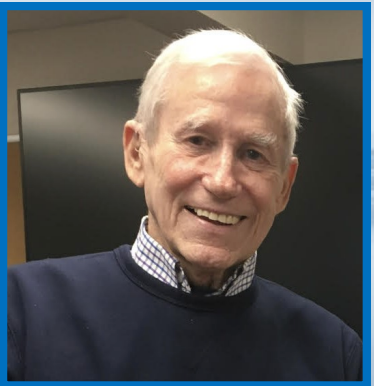 Having been healthy most of my life and recently retired I can't say that I was completely devastated by the news in 2018 of my first major, surgical cancer - anorectal. My first thought was "Well, that explains a lot", followed by my next thought: "What's next, doctor? Where do we go from here?" Of course those questions will be answered - three ostomies - and more.
But, my cancer journey began a couple of years before. From 2016 to 2018 I was diagnosed with five primary cancers: skin, throat, bladder, prostate, and anorectal. Chemo and radiation for the rectal cancer followed, then to Stanford for what ended up being three surgeries in two weeks. I lost some body parts (rectum, prostate, bladder) resulting in a colostomy and an urostomy. The throat cancer disappeared (another story), and three years ago the rectal cancer moved to my lungs, where it is being treated today. Due to radiation and surgical scarring, my kidneys were not draining properly, so two years ago I received nephrostomy tubes draining each kidney. One tube was internalized into a stent, and the remaining nephrostomy tube is permanent. I'm a three bagger.
My initial training in ostomy care was shortly before and after discharge from the hospital. My son was with me through the surgeries and was there for the training. Pain meds were certainly an obstacle to me paying attention, fortunately he was paying attention for me and was my teacher over the next weeks. Those post-surgical weeks are somewhat of a blur in my memory, but I was well cared for by my family, while home health nurses helped close the wound. Medihoney is remarkable.
My first year or so I thought I had ostomies figured out. I knew pretty much all one needs to know about ostomies, just ask me. Then, as any ostomate will tell you, reality intrudes. What worked for a long time may no longer work so well, or at all. Then a lot of "on-the-job" training about ostomy care as I lived with my ostomies day after day. Initial skin problems led me to a wound nurse, who recommended some basic remedies for dealing with skin problems. "If the skin is red, do this. If the skin is red and weeping, do that...". Many of those lessons remain to this day, a few have been discarded. That's why it's called on-the-job training.
Before my ostomy surgeries, I read that if you have a colostomy, once in a while you're going to get a little shit on your hands. What to do? Have you ever changed a baby? You wash you hands... It just happens.
Over time, my ostomies settled in for the long run. I'm fortunate I have prominent stomas, and that my skin works well with ostomy appliances and adhesives: occasional skin irritation, but serious problems are very rare.
About my "new normal", I was initially struck by the idea that it was fairly easy to change, when I had no choice. The old way of peeing and pooping didn't work anymore, like flipping a switch. Soon my ostomies became just "there", like wallpaper. ( By the way, isn't "poop" a better term than "stool"? Who came up with "stool" anyway? It has a vaguely Victorian feel, like trying to describe something without saying what it really is.
The nephrostomy tube draining my right kidney is far different from my other ostomies. For one thing, there is no stoma: just a small tube exiting from a hole in my back. I take care of my colostomy and urostomy by myself, and am pretty good at it. However, nephrostomy tubes normally exit from the back, so bandages must be changed by other people, for me a home health nurse. The bags are similar to other osto-my bags, but are at the end of a long tube rather than next to the abdomen.
They are intended to be worn strapped to a leg (Ugh!), so I just keep it in my pocket. My urologist gave the OK. Home health nurses make weekly visits to change my bandage and take care of the area around the tube exit. Also, having a tube exiting the body presents challenges absent from other more common osto-mies. Sometimes leaning back in a chair or car seat has to be done carefully. Going over speed bumps or other obstructions can be uncomfortable, depending on many factors too numerous to mention here. There is drainage from the exit hole (therefore the bandage), but neph tubes don't cause the skin problems of other ostomies where skin is exposed to our waste.
Conventional wisdom holds that patients should learn all they can about their medical condition. Some people do a deep dive into the medicine and science of their condition and learn as much as they can, be-cause it brings them comfort. That does not describe me. I do not have a medical mind and have little in-terest in science and medicine. Patients are urged to "be your own doctor." There is truth in that state-ment. Patients should learn enough to make somewhat intelligent decisions about their medical care. Beyond that, I have little interest in learning much of the medicine of my situation. It's not that I blindly follow any recommendation of any doctor (having changed doctors before), but that in the end I greatly admire and rely on doctors and our medical system. I'm predisposed to follow a doctor's advice until given good cause not to. Perhaps it's naïve, but extensive knowledge about my medical condition does not ordinarily bring me comfort.
Support groups
Like many other medical conditions, having an ostomy is sort of like belonging to a club, you're either in or you're out. Notwithstanding the wonderful work of the medical community, including specialized ostomy nurses like WOCN's, being around ostomates can have a very positive influence on the ostomy journey.
Until a year ago, I never thought I would enjoy support groups of any kind. Long before I became ill, my thought was that support groups were for other people. People who like to sit around and whine about their health. I'm not proud of it, but the idea that someone else had a medical problem like mine was of no im-portance to me. Then in 2022 I saw a notice for the Ostomy Awareness Day in Placerville, where I met Bar-bara Hoffman. I'm eternally grateful that Barbara "opened that door" for me to become involved with the Placerville group. A part of me was transformed. That part that told me "I have no use for those people or their comfort groups".
Support group meetings generally have a calming, yet engaging effect on me, helping clarify my thoughts about my journey. The benefits include the comfort and understanding that happens when ostomates "walk through that door”. People open their arms for new and returning members, understanding and compassion follow.
A new chapter
Spending time with ostomy support groups has increased my understanding of the fear that many people carry into their ostomy surgeries, and after. Understanding that, the Placerville group has a new advocacy project focused on getting pre-surgical ostomates into support groups BEFORE surgery.
Spending time with ostomates living happy, successful lives with ostomies has a remarkable effect on future ostomates. Early re-ferral not only makes the new ostomate more comfortable and less fearful, but also less likely to use medical resources, including the ER. It has been delightful to work with other ostomates on this worthy goal, con-centrating on making support group referrals a regular part of the pre-surgical scheduling process.
Benefits
Early into my ostomy journey a close friend once asked if there are any benefits to having an ostomy. Off the top of my head I couldn't think of any. However, upon reflection a couple of benefits come to mind (in addition to the obvious benefit of being alive), plus a couple of other thoughts. Obvious benefits in-clude: stool samples are MUCH easier with a colostomy compared to sitting on a "hat’’, plus chemo induced diarrhea is much easier to deal with when you don't have to rush to the bathroom every five minutes.
Beyond that are benefits that don't show up in an ostomy pouch.
Suppose someone had told me 6 years ago, this is your future. You will have lots of cancers and then will pee and poop out of your abdomen and back for the rest of your life (and occasionally leak all over yourself). I would have thought "What a terrible way to live", and that ostomies must be on the person's mind all the time. I could not have been more mistaken. You can live a great life with ostomies, just a bit differently.
Of course ostomates develop a different relationship with their waste, but living with ostomies quickly be-comes just another way of dealing with life. I was initially struck by the idea that it's fairly easy to change, when I have no choice. Now my ostomies are just "there", like wallpaper, just a part of my daily reality. The old way of peeing and pooping didn't work anymore, like flipping a switch. My ostomies are so much a part of me and my daily life that I don't really think about them very much (95% of the time).
Ostomies are so much a normal part of my life that I occasionally forget how much I have learned about ostomies and myself over the past five + years. Last week I had the opportunity to have an extensive conversation with a man scheduled for urostomy surgery in three weeks. First, I was impressed by how he had al-ready received training to prepare for surgery at UCSF, and life after surgery. As our conversation continued, it brought an awareness of all of the lessons I learned, and taught myself over the last five years. Passing on those lessons came naturally and was much appreciated.
The larger benefit is a special awareness that illness brings, an intangible certainly, but best expressed as gratitude at a level I have rarely experienced before. Daily activities take on a special significance. We've all had thrilling times (however you define them), but thrilling times never last. What lasts is, normalcy, day to day life. We spend the vast majority of our time on normal, everyday activities. Those small moments are to be treasured for the marvels that they are. Many times a day the simplest observation can trigger...wonder. Doesn't last long, perhaps a few seconds to a minute of awe! Watching my dog walk across the yard, noticing one flower among many, feeling raindrops on my face. A short reminder of the treasure I have at my fingertips.
My email address is dmccoy@dgmccoy.com