
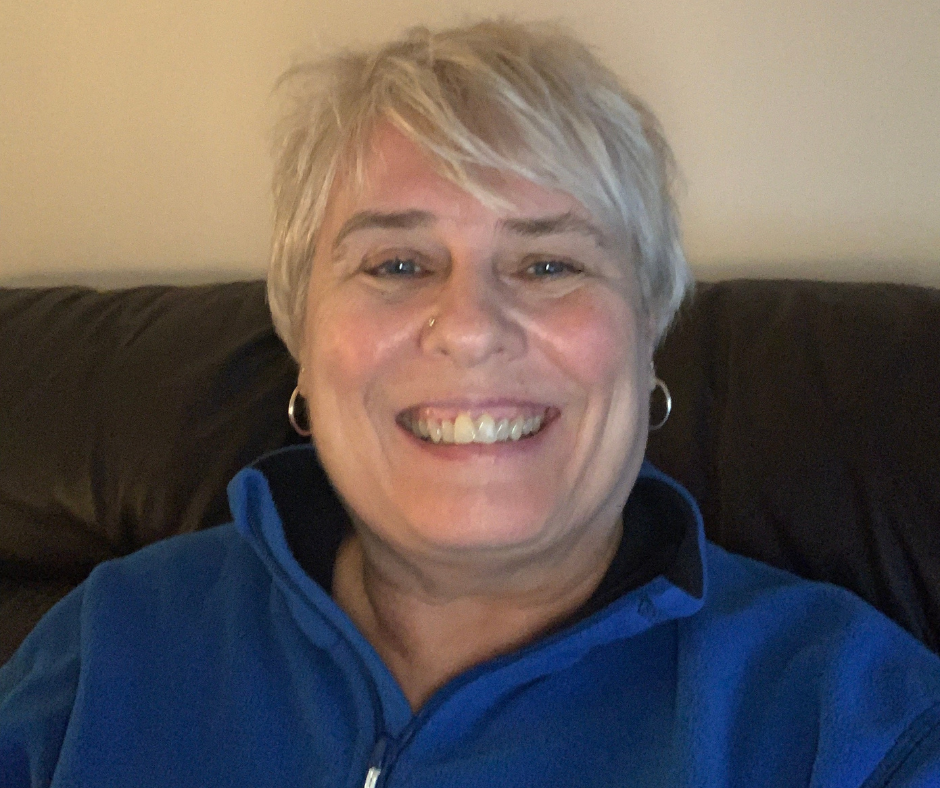
 My Anal Cancer Story
Hearing the words “You have cancer” is something no one ever wants to experience. It feels like a crushing blow, difficult to comprehend. I know this all too well because it happened to me.
It all started in November 2023 when I noticed some bleeding from my bottom. At first, I dismissed it as nothing serious, likely related to the internal haemorrhoid I’d had for nearly three decades. It had caused occasional bleeding before, but I was never in pain, so I didn’t give it much thought. But as the weeks passed, the bleeding worsened, and I felt a small lump. I assumed it was a new haemorrhoid, but decided it was time to get it checked.
On November 28th, I visited my GP. After an examination, she mentioned it seemed like a haemorrhoid, but she wanted to be thorough and make sure nothing was missed. I had a feeling she sensed something was wrong, and sure enough, she referred me to a specialist. On December 14th, I saw the specialist, who noted that the lump didn’t look like a typical haemorrhoid, but also wasn’t typical of bowel cancer. The word “cancer” took me by surprise. I dismissed it at first—after all, I felt fine. But the specialist wanted to investigate further. A few days later, I received a call to schedule a colonoscopy for December 27th.
Christmas was tough. I was put on a low-fibre diet, which meant I had to forgo my usual Christmas dinner and couldn’t even enjoy a drink. On Boxing Day, which I usually celebrate with my children and their partners, I had to switch to an all-liquid diet to prepare for the procedure. No food, just water, clear soup, and the dreadful two litres of laxative to clear my bowels. My son made me a chicken broth (minus the chicken) for dinner, which I appreciated more than words can say. My children were wonderfully considerate, eating in the kitchen so as not to tempt me. Despite the challenges, we managed to have a good time together, even if it was a shorter day than usual.
December 27th arrived, the day of the colonoscopy. I was tired but not particularly worried. I just wanted to get it over with so I could go home, crawl back into bed, and finally eat something substantial. The procedure lasted about 45 minutes. Afterwards, the specialist asked me a curious question: “Do you have any metal implants?” It didn’t make sense to me at the time, but I was too tired to think much of it. After I got dressed, the specialist wanted to speak with me, and as he led us into a room with a nurse holding a stack of leaflets, I had a sinking feeling. Then came the devastating news: I had colorectal cancer. He had already arranged for a CT and MRI scan, and now his earlier question about metal implants made sense.
I was in shock. I could hear the specialist talking, but it was as if the words didn’t register. My husband had to ask the questions because I was too dazed to process anything. When reality finally hit, the tears came. My husband asked how certain the specialist was, and he responded with 99% certainty. He had taken multiple biopsies to determine the type of cancer—whether it was skin-related in the anus or bowel-related. My immediate thought was about how I would tell my children. If this was hard for me to handle, how on earth would they cope? The drive home was silent as I mentally prepared to break the news to my family and friends, but most of all, to my children.
When I got home, I took a deep breath before walking through the door. My youngest daughter was getting ready for work and hadn’t expected anything to be wrong. She greeted me with a smile and asked how it went. In my shocked state, everything I had planned to say vanished, and I just blurted out, “I have cancer.” She was devastated, breaking down in tears. Seeing her like that snapped me out of my disbelief, and I shifted into a more positive mindset. I held her tightly and reassured her that everything would be okay. But I still had to tell my other two children, which I dreaded. My eldest daughter was pregnant, and I didn’t want to upset her, but I had no choice. I Facetimed her and my son. She cried, and my son tried to stay composed, but I was relieved that they both had their partners by their side. Telling them was the hardest thing I’ve ever had to do. Even though they’re adults, it didn’t make it any easier. I cried that day and the following morning, but I knew I had to be strong for them and for myself. I’m a positive person, and I was determined not to let this defeat me. That was the last day I shed a tear until I received my results. From then on, it was a waiting game to find out what type of cancer I had.
New Year’s Eve arrived, and to my surprise, my children and their partners canceled their plans to give me the Christmas and Boxing Day I had missed. My son and his girlfriend cooked a full Christmas dinner for all eight of us, complete with all the trimmings, and we celebrated with champagne. I could eat and drink whatever I wanted, and I made the most of it. We had the best day and evening, and I wasn’t going to let cancer ruin it.
The next ten days were a whirlwind of CT, MRI, and PET scans, as well as blood tests. Despite everything, I felt well and stayed positive. The waiting for the results seemed endless. The day of the diagnosis finally arrived, and I won’t lie—I was a bit nervous. The news was that I had stage 3 anal cancer, a rare form I’d never heard of. The tumour was 7.7 cm and had spread to one of my lymph nodes, but thankfully, it hadn’t gone any further. I then met with my oncology team to discuss my treatment plan and learn more about anal cancer and the potential side effects of treatment. The good news was that it was curable, and I was relieved to know I wouldn’t lose my hair, which may seem trivial, but it mattered to me. My chemotherapy and radiotherapy were scheduled to begin on January 31st but were delayed until February 7th. My first chemo session was intravenous, followed by tablets. I would need chemotherapy and radiotherapy five days a week for six weeks. I’m not one to take medication often, but this was something I couldn’t avoid—it was going to save my life. And so, my journey began.
I didn’t experience many side effects from the chemotherapy, aside from extreme fatigue. Having MS as well, the double fatigue was overwhelming. I had some nausea and lost my appetite, as everything tasted awful, but I managed. The radiotherapy, however, was brutal. I had been warned it would be tough, but I wasn’t prepared for how tough. About three weeks in, the soreness and burns around my pelvic area became excruciating. Sitting was uncomfortable and going to the toilet felt like passing shards of glass. The itching, the cystitis, the infection—it was all too much. I lost control of my bladder and bowels on multiple occasions. It was overwhelming, and I only got dressed because I had to go for treatment every day. I was drained, both physically and mentally, and spent most of my time in bed, isolating myself from everyone. But I had to keep reminding myself of the bigger picture and stay positive.
Throughout my journey, journaling helped me cope. Writing down my thoughts and feelings allowed me to acknowledge and accept what was happening. I may not have had control over my body, but I could control my thoughts. Even as positive as I am, there were days when negative thoughts crept in, and that was okay. I had to focus and tell myself that I would get through this, even when it didn’t feel like it, and I prayed for a positive outcome.
March 15th marked the last day of treatment—thank goodness. A few days later was my 60th birthday, but the celebrations I had planned didn’t happen. I was still too tired and washed out. It was time to heal and recover. A month later, I started to feel better, and to my surprise, my children, their partners, and my best friend arranged a surprise weekend away to celebrate the 60th birthday I never really had. It was amazing, and I had the best time, but it did take its toll, and I needed to rest for a few days afterward. But it was worth it.
July 14th, 2024 was results day. I had healed and recovered better than I had expected, given the pain and discomfort I had been in. Now it was time to find out if the treatment had worked. I sat by the phone with my daughter, waiting for the call. When the phone rang, we just looked at each other—this was it. “Jenny, I have good news. I have very good news. Your scans have come back clear, and there are no signs of any cancer.” I paused, unable to speak as the tears began to flow. “Take your time, Jenny,” the oncologist said. Once I composed myself, I thanked her, and my daughter and I cried and danced around the room. The relief and joy were indescribable. I called my eldest daughter and son, who were both overjoyed. Now I can start enjoying my new life, my new normal, with my children, friends, family, and my gorgeous grandson, who was born in June. He gave me hope and strength every single day, and he still does.
I’ll have a follow-up scan in September, and I’m confident that will be clear too.
Cancer changes your life in ways you never imagined. We all cope differently. For me, staying positive and focused was key. I wasn’t going to let it defeat me, and it didn’t.
Anal cancer is rare and often not talked about. My goal is to raise awareness about it. Cancer is cancer, no matter where it occurs, and there should be no stigma attached to it. Everyone has the right to express how they feel, and no one should feel ashamed, especially when others don’t understand. I’ve never had a problem talking about how I feel, but I know many people do. If I can help raise awareness and be a voice for others suffering from anal cancer, that’s what I’ll do.
Cancer is a cruel disease. It affects not just the person diagnosed but also their loved ones. So, if you know someone who has anal cancer, please be kind, understanding, and supportive. Don’t judge—you never know, one day you could be in that position. I never thought I would be, but life has a way of throwing curveballs. And when it does, you throw them right back. Stay strong, and remember, you’re not alone.
I’m incredibly grateful to my GP for her swift actions, to the wonderful team at Mount Vernon Cancer Centre for their care and for saving my life, to my friends and family, to my husband who took me to every treatment, but most of all to my incredibly brave children for their love and support.
One last thing: If something doesn’t feel right, whether it’s a lump, bleeding, or abdominal pain, go to your GP and get it checked, even if it’s just for peace of mind. We’re always told to check our breasts, but I say, CHECK YOUR BUM too.
My light will keep shining, and so will yours.